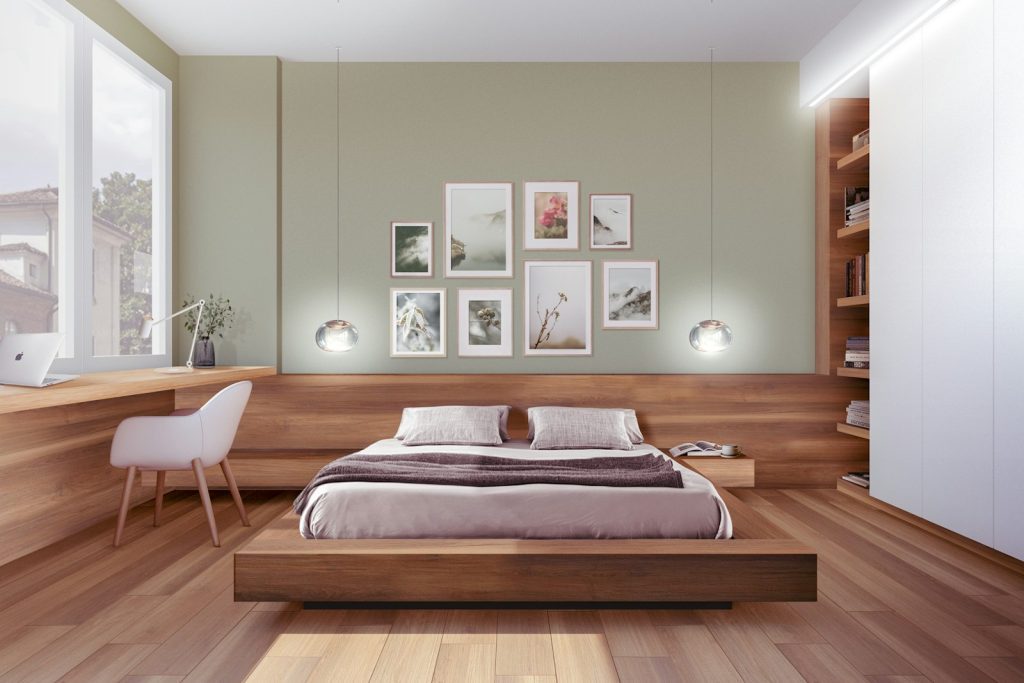
Japandi flooring interiors lie between two worlds of design. Their design is a blend of Scandinavian coziness and Japanese restraint and discipline. The outcome is peaceful, harmonious, and deliberate. Nothing seems extravagant, but nothing seems cold.
Flooring, in these interiors, has a bigger role as it forms the emotional foundation of the space. In case it is too light, the room may look vacant. When it is too dark or expressive, it may be heavy. Japandi floor should be in the middle – cozy, natural, and subtle.
This is where high-quality laminate flooring India finds relevance; by offering control, consistency, and character (of wooden flooring).
Japandi Flooring Beyond Style.
Japandi is not merely a decorative trend, but a method that is aimed at the essential and truthful. The furniture is minimalistic, the materials are natural, and the colours are kept close to earth tones. There is no visual noise, and no warmth is taken away.
This balance should be quietly supported with flooring in Japandi homes. It must not become a feature in itself, and it cannot be artificial or flat. The object must be grounded, tactile and smooth.
Traditional wooden flooring is associated with this aesthetic; but can introduce strong variation or deep colour shifts. Well-designed laminate flooring wood surfaces allow greater control over tone, grain, and overall mood; which makes laminate flooring in India especially suitable.
The Requirement of Japandi Flooring.
Japandi floors have several definite principles.
Colour is not as important as tone. The floors tend to be placed in warm-neutral tones like beige oak, soft natural wood, or gentle greige. Very cool greys are too Scandinavian whereas darker brown is traditional.
The grain of the wood must be seen, but not excessive. The heavy knots and high contrasting take focus and Japandi would like the grain to be natural and smooth.
Surface finish; is as important. Artificial gloss and shine spoils the atmosphere. Matte finishes that have a small amount of texture are more in line with Japandi values.
Lastly, the floor must bear the everyday life without commotion. It must have a visual continuity between spaces, where furniture, light and personal objects are able to define the home.
Why Laminate is a Good Fit to Japandi?
Modern laminate flooring types are far removed from earlier perceptions of flooring. Most of the existing collections focus on tone, grain authenticity, texture smoothness – aspects that are more in consonance with Japandi style.
The grain is there but controlled in Mammut Plus – D 4752 Macro Oak Hellas (Light). The surface is not noisy; it is tactile and the floor is materially sincere but cool. This harmony is critical to Japandi spaces, in which flooring should support the room and not be assertive.
The same restraint is also evident in Exquisit Plus – D 6021 Kashmir Oak Beige where the warmth is also highly controlled. The tone is not yellowing or heavy-grain contrasting, which is why it fits perfectly in the spaces which have to use light, shadow, and natural materials as their character.
Amazone – D 6014 Elbe Oak Nature is elegant, sophisticated and is balanced in the finish. The nteriors of its composed surface and the calculated plank form are in favor of the order, continuity, and visual clarity.
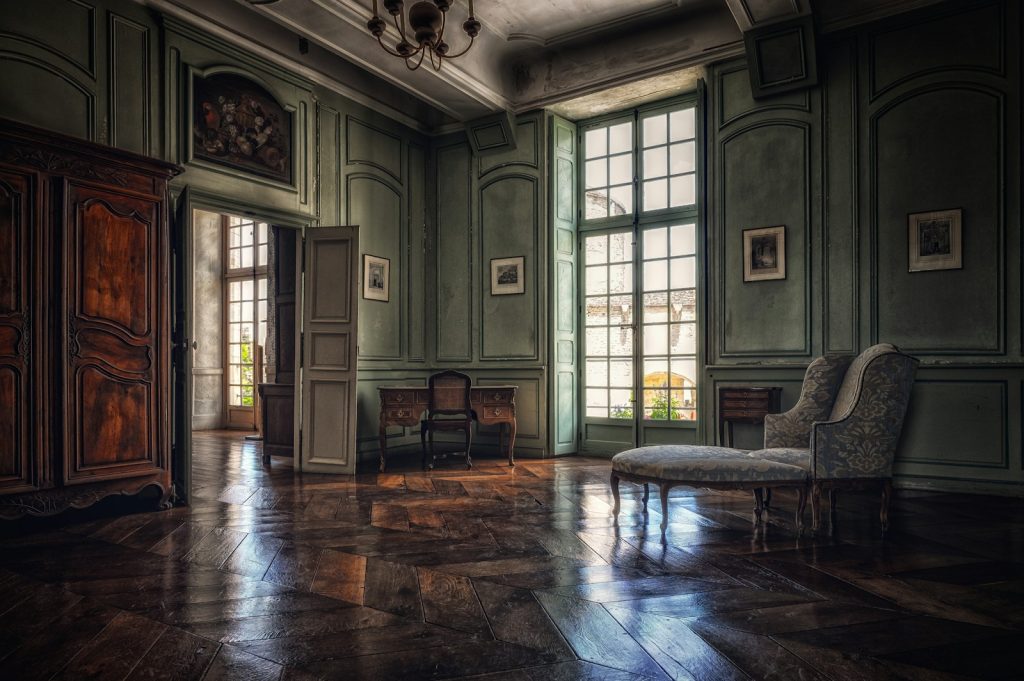
Others that are more expressive like Herringbone – D 3678 Toulouse Oak require much more restraint. Their powerful geometry may interfere with the subtle rhythm that Japandi interiors are based on, that is why they can be used only in the most restrained, minimal environments.
Selecting the Appropriate Range, Not just the Appropriate Appearance.
The most widespread misconception is to consider Japandi as one look that needs one product. In reality, most laminate flooring types can get the aesthetic; when tone and surface are suitable.
Premium collections – superior embossing, perfection of the grains and surface fit, reinforcing the material sincerity. Further accessible collections may also be effective; in cases where intentional calmer selections are made.
With laminate flooring in India offering a wide spectrum of quality and expression, choosing the right range becomes less about price and more about clarity (of purpose).
Living with Japandi: Design Restraint in Practice.
Japandi is best used when the flooring is faded into everyday life. The perfect floor will not demand attention. It does not rival movement, light, and furniture.
This silent presence enables residential buildings to change with time. Furniture can change. It is possible to add or remove objects. The space is not very busy due to the lack of a fixed character by the floor.
By so doing, Japandi is placed harmoniously between the Scandinavian openness and Minimalist reduction. It is warm and not too warm, structured and not too rigid. Flooring becomes the constant foundation which enables the other parts of the home to inhale.
Conclusion
Japandi interiors are created based on a balance – warmness and moderation, expression and silence. Flooring is of a primary importance to this balance although it is not always intended to be the focus.
Carefully chosen laminate flooring wood surfaces allow this balance to be achieved with precision. With controlled tone, refined grain, and calm finishes, Indian laminate flooring has evolved into a material that supports Japandi’s principles rather than competing with them.
By doing so, Japandi ceases to be a direct style and rather an intention. The flooring lays the groundwork and space, light, and normal living take centre stage.